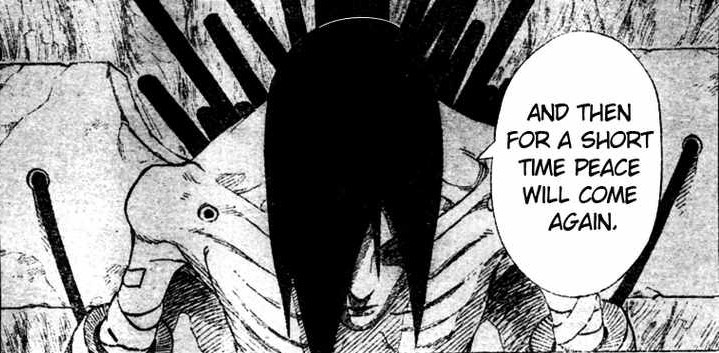
The last war is fighting the urge to become what once took away everything we ever loved.
Over the last few years, I have been trying to figure out what has changed so elementally around me. There have been pandemics before, wars too. What is new for this generation may not be that new for humanity at large. I wonder what it is but recently, reality does seem stranger than fiction. Maybe it was always so. Is it because I am older now? Maybe I have become more receptive to it now. I feel drawn towards surrealistic art, anime, and dystopian sci-fi literature. I marvel at the insights that had already been left for us in history and by so many artists. Recently, I have been re-reading Margaret Atwood’s The Handmaid’s Tale. To me, the book was a nightmare coming alive. And yet what frightened me even more was sensing that the promised nightmare was already here, breathing down my neck in the world around me.
When I wrote The Handmaid’s Tale, nothing went into it that had not happened in real life somewhere at some time. The reason I made that rule is that I didn’t want anybody saying you certainly have an evil imagination, you made up all these bad things. I didn’t make them up.
Margaret Atwood
There are two thoughts, out of a trillion others, that often keep gnawing at me, no matter how much I try to push them away. I can make them fade out in the background from time to time, but not for too long. And that is because no matter at what stage I am in life, no matter what time or space, what moment in history, I can feel the ghosts of these thoughts waiting for me inevitably at the end of every road. One answers the other, yet, inevitably ends up strengthening the perplexity of the other. What remains is a big question. A question I am too small to answer on my own.
I have always found it despicable whenever I caught myself receding into bad habits, even after knowing fully well they are bad for me. As such, when other people continue to walk down certain paths knowing fully well where they lead, I feel infuriated, and yet, I understand them completely. It is not easy to act on something even if you know everything. Everything that can dissuade you from walking down that road.
Because things are not as simple as they seem on the surface. We hardly understand anything at all about life, death, reality, and the cosmos.
Taken on a larger scale, these are the thoughts that keep revisiting me:
Why, after all these years of recorded histories of nations and people, their diverse life experiences, after knowing about the outcomes of wars, violence, and greed—why do we continue to walk down the path of self-destruction? Why have we not solved world poverty when there are enough resources to go around for everybody? Why can we not take better care of our environment? Why can we not change when we know how this ends?
And yet, if I ask myself truthfully, how many times have I witnessed myself continuing to repeat the patterns from my own life history, let alone learning from the example of the people around me. My head took cognizance and acknowledged the experiences of the people around me. I heard the voices of my parents and understood the logic behind their words. Yet, I still had to see for myself. And even after seeing for myself, I continued to repeat many mistakes throughout my life. If someone would question me about it, even if it was my own self asking, pleading through a journal entry addressed to my future, I could only answer this with: It’s complicated.
And if it’s that complicated for one life, my own, I cannot even begin to imagine nations, the world, and the entire universe and its geological history.
I am thirty years old. I am at that stage in life when I don’t really care about the way I am perceived by others. If I am perceived as a weeb, so be it. I would proudly proclaim myself as one. My utmost respect for Japanese philosophy and way of life did not grow overnight. I have learned about it slowly, seeped it in, drop by drop, slowed down enough to catch its still silent message in the air. I have slowly found myself growing attuned to this philosophy, the slow pacing of the narratives, and learned to be grateful for the small joys of day-to-day life. Inevitably, I have found myself growing deaf to the formulaic fast-paced flicks. The message that Miyazaki has engraved into his films can be seen operating in many Japanese films and anime as well:
The concept of portraying evil and then destroying it – I know this is considered mainstream, but I think it is rotten. This idea that whenever something evil happens someone particular can be blamed and punished for it, in life and in politics is hopeless.
Hayao Miyazaki
This idea lives at the heart of Naruto and Attack on Titan as well. The character arcs of Sasuke Uchiha and Eren Yeager are records of how villains and dictators are born. The rich background stories of antagonists are very important to better comprehend that blame cannot be placed so easily. Kaya shows a lot of maturity in her ability to understand that Gabi, even as an Eldian serving the Marleyans, had nothing to do with the death of her mother. Yet, on discovering that Gabi fired the shots that killed Sasha, the woman who had saved her life, Kaya is unable to repress her anger and lashes out to blame Gabi. True, the finger that pulled the trigger that killed Sasha belonged to Gabi, yet, maybe the shot that killed Sasha had been fired long before. Was it when Sasha herself killed Gabi’s comrades? Was it when Eren’s mother was eaten alive by the titans which, in turn, lead to the attack on Marley? Was it the moment when Reiner refused to turn back and decided he wanted to prove his heroism? Or did it all start long before that with power and the distrust that seemed to grow around it like a plague? Where were hate and distrust born? Who can be blamed? Who can make amends?
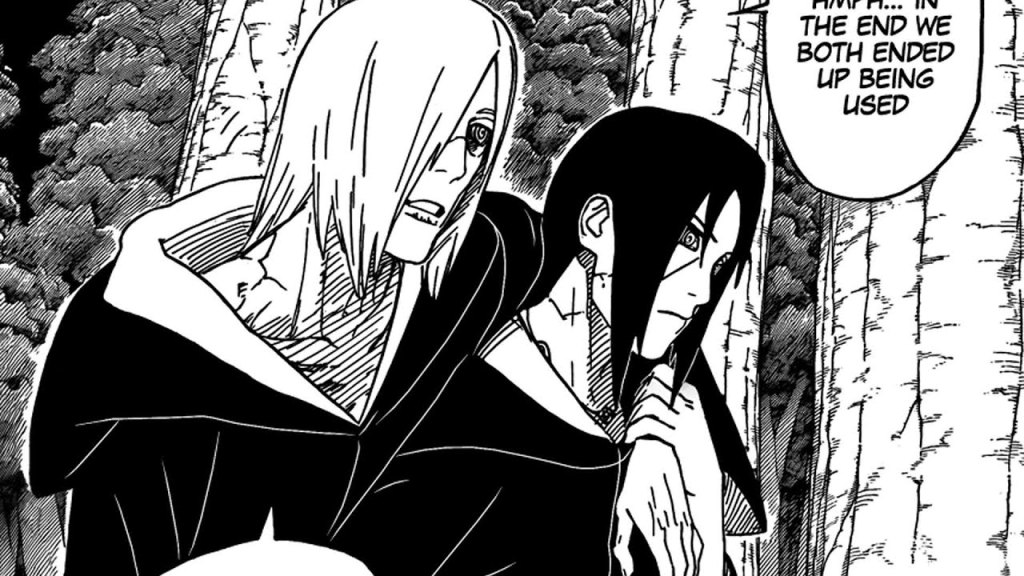
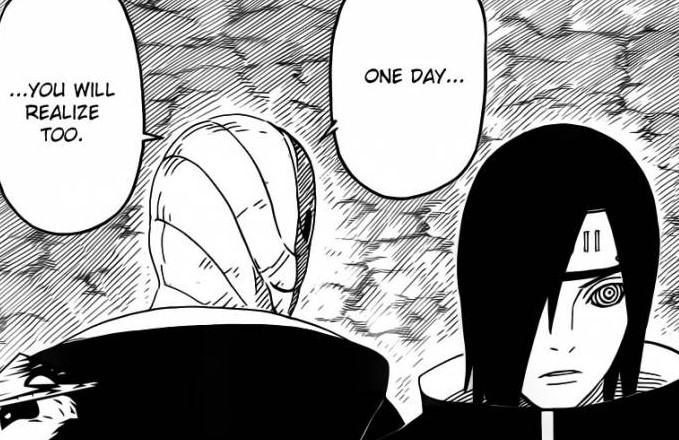
As Pain says to Naruto:
We are just ordinary people driven to revenge in the name of justice. But if revenge is called justice, then that justice breeds yet more revenge and becomes a chain of hatred. […] Just by living, people hurt others without even realizing it. So long as humanity exists, hate will also exist. There is no peace in this accursed world. War is just a crime paid for by the pain of the defeated.
Or when Madara Uchiha spoke:
In this world, wherever there is light – there are also shadows. As long as the concept of winners exists, there must also be losers. The selfish desire of wanting to maintain peace causes wars, and hatred is born to protect love.[…] Talking about peace, whilst spilling blood, it’s something that only humans can do.
Naruto
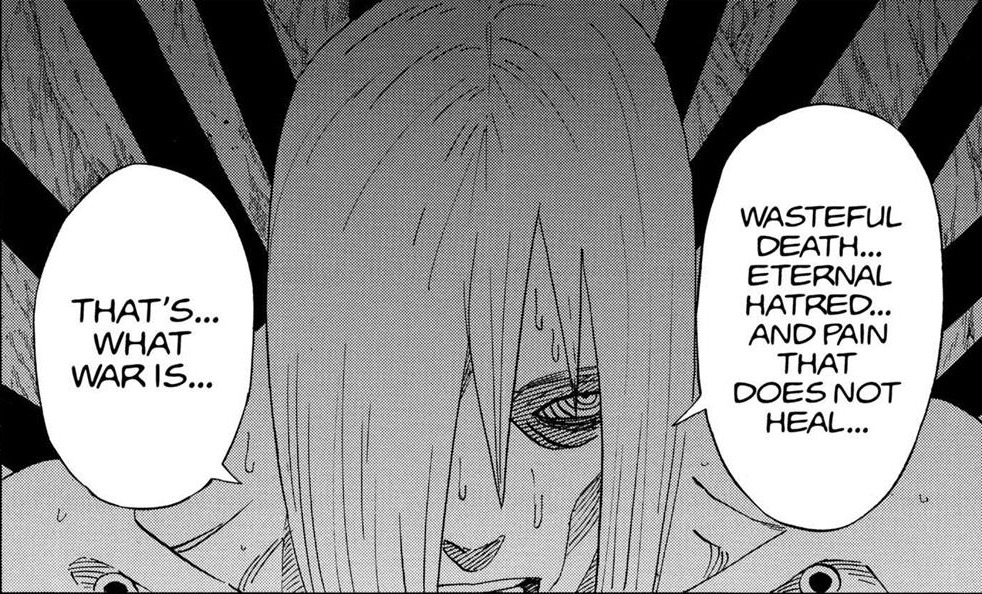
Today, as Russia invades Ukraine, why do I feel as if Pain and Madara had made a prophecy of sorts? If I am being honest, I cannot bring myself to completely disregard the doubts and philosophical problems these characters had already been dealing with for a lifetime. Naruto’s own silence and temporary self-doubt upon hearing them speak says more about it than anything else that I can say here. What went wrong with Sasuke, Eren, Yagato, and Kabuto? What did pain do to all of them? They were not born that way. Can blaming or punishing one Eren or Kabuto end war for good? Can you ever blame one side completely? Isn’t Gabi another Eren in the making? The conversation between Eren Jaeger and Reiner Braun sheds more light on the similarity of the human condition worldwide than anything else. Often, stepping from one side of the narrative to the other is like stepping through the looking glass:

Eren Jaeger: It’s true… I once thought of everyone on the other side of the ocean as my enemy. Then… I crossed it. I slept under the same roof as my enemies. And I ate the same food as them. Reiner… I’m the same as you. Sure, there were people who pissed me off. But there are good people too. (glances at Falco) Past the ocean… Inside the Walls… We are all the same. But all of you… You were taught that everyone inside the Walls was different from you. That they were demons. That they were devils that threatened you Eldians who lived on the Continent along with the rest of the World. You were ignorant children. And all of that was beaten into you by ignorant adults. You were just a child. What could you have done to fight back against that? Your environment. Your history. Right, Reiner? All this time… It was painful for you, wasn’t it? I think now… I finally understand that.
Reiner Braun: … (breaks down completely in anguish and self-loathing, falling at Eren’s feet) NO! You are wrong, Eren! I… That day… That day… When Marcel was eaten… Annie… and Bertholdt wanted to abort the mission. They tried to turn back, but.. I… I convinced them not to… and made them continue… Yes… It was partially out of self-preservation… But… I wanted to become a hero! That’s why I always acted like everyone’s big brother too. I wanted someone to respect me… That wasn’t about my age or my environment… It was my fault. Your mother was eaten by a Titan because of me!! I can’t stand this anymore… Just, kill me, please… I want… to vanish…
Attack on Titan
Somewhere between circumstances and free will, lies the truth. The choice to grow up and turn into Kabuto or Naruto is partial and yet definitely there. There are enough Danzos sitting in political power, channeling the hatred of the world and throwing around the lives of their people as if they were mere pawns. When Asuma tells Shikamaru that the kings in a game of chess are actually the common people and not the hokage, he comes to understand the first rule of the Leaf village which dictates that at the time of crisis the first necessity is to protect the people and get them out of harm’s way. For when the people are lost, then all is lost. And yet, the politicians today who puppeteer the strings of wars sit back comfortably after pronouncing death sentences on their people. They should be the ones put together on the battlefield and allowed to fight out for their vested interests. Ordinary people know the value of their ordinary day-to-day life and its priceless peace. They are never the warmongers. Never were.
It is easy to place the blame on one nation, one leader. Vilifying Putin is one thing. But feeling satisfied with just that would be a grave folly. The roots of the problem go much deeper. Why does NATO still exist even after the end of the cold war? What about the death of Ukraine’s sovereignty in 2014 and the U.S.’s role in it? An invasion is an invasion. But it is also an invasion when the U.S. and its allies use terms like humanitarian intervention, counterterrorism, national security as excuses for their terrorist acts. What about the bombing in Syria and Somalia? This is not the beginning of war only because this goes counter to the vested interests of the protagonists of the present narrative, namely the US and its allies, it simply means the widening of the battlefield that already exists, has continued to exist under various premises, behind various excuses. The widespread hysteria against China is nothing but a blind echoing of the inherent insecurity and paranoia felt by the U.S. as China emerges out of the US’s economic influence. This is not to say that invasions should not be condemned. All invasions are violent. Precious lives are lost daily because of them. Violence needs to stop. The fact that we were blessed to be born on this planet where there is enough for us all to co-exist peacefully and yet we continue to live in a world where such inequality and injustice continue to exist is a shame. Eren’s words still ring in my ears. His cry to fight, to fight for freedom. 戦い! Tatakai!
We’re born free. All of us. Free. Some don’t believe it, some try to take it away. To hell with them! Water like fire, mountains of ice, the whole bit. Lay your eyes on that, and you’ll know what freedom is, that it’s worth fighting for! Fight to live, risk it all for even a glimmer of real freedom! It doesn’t matter what’s waiting outside the gate, or what comes in! It doesn’t matter how cruel the world can be, or how unjust! Fight. Fight. Fight. FIGHT! FIGHT!!!
Eren Jaeger, Attack on Titan
We cannot avoid this fight. We have to fight. But what shape will our fight take? Naruto’s fight is not against a person, a villain—as much as it is against hatred at large. His fight, rightly, starts inside himself, as he comes to terms with the hatred and resentment in his own heart. That is the hardest fight there is. And yet, how do you take on the hatred of an entire nation, an entire community, the human civilization? Can it be done? Madara Uchiha dreams of an ideal world. His project Tsuki no Me (The Eye of the Moon) is his own solution to this philosophical problem of the human condition. He wants to trap the entire world in a dream state in which people lose their egos, sense of self, free will and are united together under one will, his own. Yet, this peace would be an illusion at best. Even if human civilization could start from scratch and be a tabula rasa, due to an in-built flaw in our design, we would inevitably find our way back to all the hurt and misery we suffer from today.
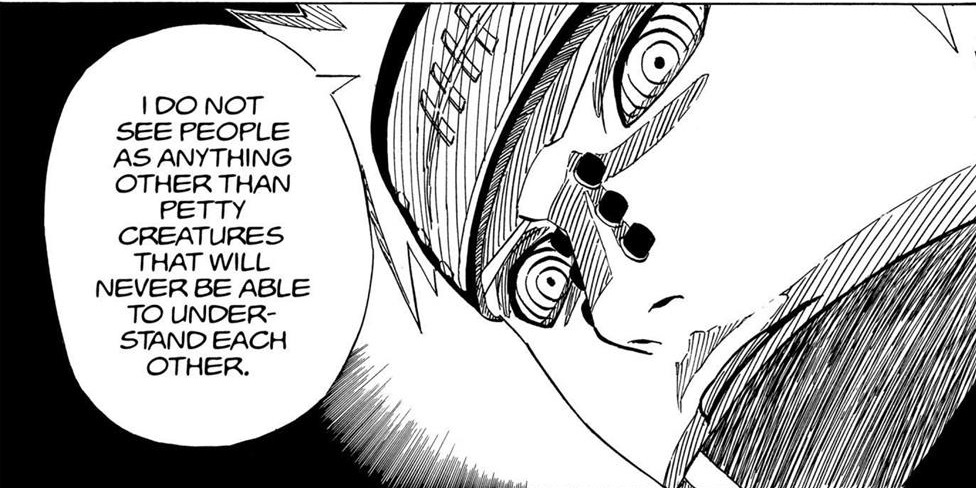
Can we find it in our hearts to transcend this human condition? How do you resist the urge to lash out when you have been the victim of an act of injustice? Should you let the unjust walk all over you? Put forward the other cheek, as Gandhi would say? How do you decide? I am yet to see how Naruto and Attack on Titan resolve these philosophical problems that are at the heart of their narratives.
These are tough decisions.
Levi had something to say about that:

I don’t know which option you should choose. I could never advise you on that… No matter what kind of wisdom dictates you the option you pick, no one will be able to tell if it’s right or wrong until you arrive to some sort of outcome from your choice.
Captain Levi, Attack on Titan
But we already arrived. Countless times. The first world war, the so-called “war to end all wars,” led to the second world war. The second world war led to the cold war. NATO, the relic of the cold war, continued to expand unchecked. And now, Russia is invading Ukraine. We have always known the outcome. There are no victories in war, only defeats. Every war, every act of violence, sows seeds of hatred that never cease to perpetuate even more violence. Honestly, every time I wake up horrified how the world has become slightly more terrible in its countenance than yesterday, adding to itself more suffering, more misery, I feel a sense of déjà vu.
This has happened before. This will happen again. George Santayana stated, “Those who cannot remember the past are condemned to repeat it.” It seems we are all stuck in the Izanami with Kabuto in a constant loop of human misery as a promising future keeps flying by. Until or unless we fundamentally shift the way we feel, there seems to be no way out of this genjutsu. I wish I had the answers, but I don’t. The questions are too big. And they continue to haunt me.


 Uhi K;
Leave a comment