-
Out of Place
An excerpt from Half Lies by Ruhi Cheema

You know the feeling of coming out of a disco bar, slightly tipsy. The music dies down as the heavy doors shut behind you, but the rhythm remains. Entering my thirties felt like that. I remember countless walks towards parking lots after weddings, dinners, birthday parties. The cool night air always felt more welcoming. As you walk away, the din dies down, slowly but steadily. Suddenly, the outlines are much clearer. The memories real. The words spoken remain distinct in the mind. It is, as if, now one can speak the truth, in retrospect. And truth was spoken, often by someone in the backseat of the waiting car. All of a sudden. And no one said a word. But we all knew. That this felt real. That it could not possibly be otherwise.
But I am lying. This tendency already began to develop in my late twenties. Age is definitely a number, but up to a point. These changes are so gradual, one never knows. The first leaf is already falling as you complain about the summer heat. Before the hand turns the key to open the door, the mind has already opened countless doors and walked a million steps.
Writing is always an act of being in the middle. Of that which has already happened and of that which will be—I am both. There are things I can tell you and there are things you can tell me.
And then there are those that we can’t.
Someone once asked me, “Would you like to be seen?” What I replied reveals a lot about me so I won’t tell. And neither ask it of you. But privately, what would you say? To be seen—does it make you feel relieved or wary? Divine or demonic? The need of the soul to be witnessed—is it a miracle or a violence? Or even better, a violent miracle.
Fractals are everywhere in nature. On animals, snowflakes, tree trunks, electric currents, clouds. I tend to think that if our lives were plotted on a graph, we would find fractals there too. There have been many deaths and renaissances within my own lifetime, or whatever part of it I have lived. Like the rings on tree trunks, I feel like I have been ‘growing’ in circles, one layer at a time. I pass by similar milestones. The challenges change, but they evoke resounding echoes. That I have been here before. Slightly smaller, more unsure. But I was here.
When I was 5, I was agitated. The grownups knew next to nothing. For all their power. For all their resources. They still knew so very little, I thought. My concerns were tiny but I felt strongly about them. And lord, was I willing to fight. I could not differentiate between passive aggressions and active ones. I failed to understand how someone’s passive provocation could go unpunished while my active reaction to it was. I didn’t understand why telling the truth was embarrassing. Or why grownups laughed off my genuine fears and explained away my irritation to lack of sleep. In all seriousness, I conjured a child court and passed judgement on myself and the people around me there and then.
And though I spoke, inherently I was aloof. For a long time. Still am, at times.
But sometimes, when all is quiet, someone—once in a while—says something, that makes me come out. It thrills me. That resonance. But it is rare. And maybe that is why it is so beautiful.
If you find yourself nodding to this, or if I find you nodding to this—I do not presume any more than what that entails. I do not presume, for instance, that if I were to butcher your solitude and we were to talk over a cup of coffee, we would find an alignment. That is the ultimate irony. Solitude brings us together, separately. We all have felt it. This feeling out of place. And in a weird dysfunctional way, this is how we are cursed to belong. As Beauvoir said, “To be oneself, simply oneself, is so amazing and utterly unique an experience that it’s hard to convince oneself so singular a thing happens to everybody.”
My thirties have made me understand that. I am still out of place. No more, no less than before. But I am okay with being out of place now. And that has made all the difference in the world. It is a slight shift, but the more you follow through this shift, the more drastic it seems to become. Elementally, it changes the way you feel about everything around you.
Twenties are a test of your convictions. Either you stick with them. Or, in violently rejecting them, you end up embracing them even more strongly later. Some convictions break for good, never to see daylight again. Some continue to haunt the shadows beyond all rationale. This is why this time is often so turbulent. You are learning more about yourself. Darker things too. In one form or another, you are learning about loneliness too that tends to seep through, no matter what dams you build to bury it, through all drinks, laughs, tears, noise—one quiet moment is all it takes to know that this lived experience with all its sorrows and joys is often yours alone and “that when the drinking was done,/ the drinking wouldn’t make the stories/ we brought home any easier to tell” (Reginald Dwayne Betts, “Essay on Reentry”).
This happens especially when you are in pain. The mind can lie. But the body doesn’t know how to.
Remember those men and women in films that often play the role of a mentor, that know all there is to know about storms and demons and always have shelter and guns available? People in their thirties can be like that. They know the markings of the wolf when they see one. They have been through heaven and hell and back, almost. They have been alone too and it doesn’t bother them anymore even though they are still in the game and the hunt is on. Their skies get dark too. But they know now what to do. They look up and say, “No big deal.”
Often these men and women die in films. But we won’t talk about that here.
I have seen terrifyingly beautiful things. Terrifying yes. Beautiful, only if seen out of context. Poetry is like that too at times. Often, I like to slice poetry lines out of their context. I pause by the roadside, right before the turn to the next line and I wait for a glimmer of that Egyptian sun blessing a secluded corner which becomes God to me in that moment. I make my own destination there and then. I open my purse and put that line in it to keep close at night when the shivering gets worse. From time to time, we can be like that to one another. Lines without context. I remember being told I looked terrific on the day I wanted to die. I don’t doubt them. I must have looked terrific and cold. A line without a context.
These days, I welcome such a reading of my life. All that happens is welcome. Everything can fall and rest around me. When I was 28, I wrote in big bold letters on the wall of my room those words by Frederick Buechner: “Here is the world. Beautiful and terrible things will happen. Don’t be afraid.” And I believe in it, even more firmly in my thirties. And these words are probably all that I would put in a glass bottle to throw as a message into the ocean.
Well, maybe not. What I will put in there is a secret.
When I was twelve or thirteen, I remember daydreaming, looking at the advertisement brochures that fascinated me a lot more than the gifts they fell out of, gifts that some of my relatives would bring for me from abroad. They had pictures and prices of toys that seemed too extravagant, too impossible for a child to possess. They were out of place, sitting there on the table of our living room surrounded by darkness due to another power outage. They were potentially useless. Have you wondered why in every household, there are multiple half-filled shampoo bottles, conditioners, creams, hair oils? Because nothing seems to work. Things. Delivered and returned. Thrown. They often arrive either too early or too late. And you can never find things when you need them the most.
So is with people too.
One day I sleepwalked myself to the washroom and wrote this on my phone, half asleep:
“Do something about the words you keep whispering to yourself under your breath.”
Now there’s a fine New Year’s resolution or what.
These things are easier said than done. There is too much noise around, too much movement for anything to shift elementally. That shift requires a moment of of stillness.
The other day in bus I saw this boy reading a book. He had only a few more pages to go. That last delicious bit. I could tell by the way he could not take his eyes off it. If you are a reader too, I am sure you know that feeling. Nothing can stop that marathon when you are nearing the end. You are propelled by all the forces that be. You must see it to the end. When he finished the book, he finally looked up. His eyes were still not seeing what was around him. He had woken up but into a different space, a different place. It would be a while before he would return. He got off the bus at his stop and I noticed his shoe laces had not been tied. Clearly, he was still under the spell. I often wonder about that invisible bubble that book readers, artists, people engrossed in any kind of labor of love often have around them and do not emerge from for really long, even when they ultimately talk to you. It is fascinating how that can often be a super power of sorts. To tone down the din that surrounds you. To finally listen to that still voice. To finally have enough clarity, strength, and simplicity to act.
With time, my beliefs have evolved. I feel there are no cues now. There is no script. God is electric. Take-outs definitely taste much better the day after and brunches are underrated. Less is more. Subtle is bold. Irony is the blood of my blood, the flesh of my flesh. It is hilarious really once you sit down to enjoy the show.
But you need to have the nerve.
We have often heard the saying that we hate what we don’t understand. But there is another one. We often desire that which we don’t understand, or at least hold a tender fascination for it. Like the fishermen enchanted by the beautiful alien woman who arrived in the utsuro-bune send her back to the sea, frightened by her strangeness yet unwilling to harm.
This morning on my walk I heard a poem sung in Ojibwe. It sounded so gentle and wistful, rounded and smooth like a pebble in a stream. I had no idea what it meant. And that is exactly why it meant so many things all to me at once because the signifieds had flown away like doves in a row and now I could not tell whether those were birds, clouds, or puffs of cotton. All that remained rightfully to guide me was how the words felt, the music they held.
For instance, consider these lines by Ada Limón:
“At the funeral parlor with my mother, we are holding her father’s suit,
and she says, He’ll swim in these.For a moment, I’m not sure what she means,
Ada Limón, “The Hurting Kind”
until I realize she means the clothes are too big.”You see, I clutch on to the image of her maternal grandfather swimming away, floating, freed, in a rapture. I refuse to think of him buried underneath, dormant, in clothes that don’t fit him. I would rather imagine those clothes to be supermanly, imbued with powers to dive deep into the ethereal. This is how I imagine my nani too, who is no more.
One day I had an epiphany that she was here, with me. She was free. Not bed ridden now, she was a girl again, one with the wind that made the trees beyond my backyard come alive.
And I can see why subconsciously, Limón’s mind first went to that place too.
I guess living your life in your thirties is quite like that. You choose your context. No matter how wild, or how bizarre. This evening, standing next to the waters, I feel potent. The trees, the rocks, and the mountains know. This is not my home. When it gets darker, I will leave. But till then, I will stand tall among them like a witch of the night.
And if I say I am, then maybe I am.
“She strutted by in all her strength and glory, invincible,
Ada Limón, “Wonder Woman”
eternal, and when I stood to clap (because who wouldn’t have),
she bowed and posed like she knew I needed a myth—
a woman, by a river, indestructible.” -
Mother by the Sea
In all photographs,
she seems to almost float
uncared for, uncombed
an afterthought
following all her days
when she must roll like a wave
over and over again
rushing over to serve
unfurling endless utensils, blankets, tissues
in the middle of nowhere.
Her hands tremble and awkwardly retreat
from ornaments
smiling furtively, she quickly looks away
her mouth shaping a narrative about
wanting things but letting them go.
I tell her endlessly
of the women, glorious women
with folds of flesh like hers
in cropped tops and biker shorts,
gleaming in the Victorian sun.
But not for her
“too late for that,” she says.
Out by the sea,
she is unafraid
walking to the stonewall
where an old battered book has been laid out,
its pages ruffling ceaselessly in the wind—
“read and unloved”
or “maybe put out in the sun to dry”—
she can’t decide but takes it into her fold
and brings it home.July 13 2022
-
Is there such a thing as “a sad cup of coffee”?
Once, Robert Rauschenberg, a painter and an artist said, “I used to think of that line in Allen Ginsberg’s ‘Howl’, about the ‘sad cup of coffee’ … I have had cold coffee and hot coffee and lousy coffee, but I’ve never had a sad cup of coffee.” This makes me think if there really is such a thing as a ‘sad cup of coffee’? Have you ever felt like you tasted sadness in a cup of coffee? I think of honey dripped skies, autumn leaves, that sheen on the back of brown eyed horses, sunsets, evenings, brown pages of old books, sweaters and socks. But sadness? Quite to the contrary. When I take that first sip of coffee, I feel like everything is going to be okay.

-
Of Poems and Gardens
water your plants/ save spaces to breathe/ ease closed fists/ one finger at a time/ let the wind hold your face/ between cool palms/ unfurl the trees within your gardens/ let them spread their arms to the sky/ and know that/ from where they stand/ the sum total of the world’s troubles/ is a big round 0

It has taken me quite a while to sit down and sit still to write this piece. I told myself, straight from the heart. So here it is.
It is quite sunny outside. I can see the trees beyond the backyard and some of the blue sky that the trees allow. Today when I was taking a walk, I saw an orange helicopter and did not think much of it. I also saw an abandoned stroller by the pathway that went down to the brook and did think a lot about it. This seemed like a perfect setting for an Agatha Christie novella. A woman was walking down the path in front of me. Was she the mother? Where was the child? Did she get second thoughts about being a mother? Did my mother ever feel that way when things got hard as they surely must have? My mind went back to the detective stories my mother is so fond of reading.
For as long as I can remember, I have wanted a peaceful, an almost uneventful life. I am lazy that way. I have these moments when I crave velocity and change but they never last long. When I am taking a walk, out among the trees teeming with birds, squirrels, and the occasional hopping rabbit (or if I get lucky, then a cat), I feel most at home. These are the only kinds of events I need. The lull of the sea waves, a group of sparrows hopping and crossing my path, watching my love as he sleeps and turns towards me, laughing endlessly with my brother reenacting the antics of Yakul from Princess Mononoke, or watching the sunset at the harbor with my parents. I crave a simple uneventful life in a world that wants to fill itself up, cram in all possible experiences.
Don’t get me wrong. I don’t hate new experiences. I welcome them. But I find the slow pace of my life soothing. I do not wish to run. I do not wish to plan too much. I cannot be everywhere all at once so I want to be where I am 100%.
Once, as I was sitting by the sea and it was getting dark, I chanced upon a song about dying. More exactly, the last moments before death. And suddenly, I felt like I was waking up from a dream. How could I possibly forget? That everything was temporary. That in this world, we are only given a moment and we must reach out and touch the core with all sincerity of our being. What would you do in your last moments? What would you hold close? Believe me. Think about this long enough and it changes everything. On my way back home, I looked at the trees of the forest in a different light. I felt they had been here long before us. And that was true. They had such grandeur, such magnificence. I felt like I had come to a primitive untouched world. That I was simply passing by. They would still be here. They towered above me so, like gods. Seen from this perspective, all of a sudden everything I was doing so far, everything that I fretted about or took pride in seemed like nothing. New found beliefs were born. What was truly important. I felt I had not seen it so clearly before. All that noise that came like a strong electric current through so many devices had always added to the numbness. And yet, a stream had found its trickling way through.
Outside, the trees are moving in agreement. It is one lazy afternoon. Perfect for telling this story.
I am a loner at heart. I have tried to fight my nature. I have forced myself into friendships that I could never sustain. I tend to guard my solitude ferociously. I feel drained too easily. One moment, I am in awe of my company and the next, I find myself receding, moving deeper into the background. That is what I want. To smudge myself into the background. If I could, I would love to talk through the walls to a perfect stranger next room. As long as I didn’t have to meet.
If anything, insecurities whenever they crop up, tend it hit me deeply though on the surface it may not appear that way. Maybe it is because I take my time dissecting the way I feel and try to understand why my mind and body react in the way that they do to different things. Maybe it is because of such intense examination that the smallest of events can be so overly stimulating for me.
I have talked before about planting your own garden, but usually in poetry. Today, more than ever before, I feel grateful for the garden that I and the people who love me planted around me. You can plant different things in your garden; memories and moments that bring you joy. They can be silly; they can be meaningless to others. But if they matter to you, place them with love and care inside the fold of your garden. Pour sunlight on it every single day you feel content. Give it rain on days when your thoughts are full. And some day, when your heart is heavy, this garden will be there, warm and ready to welcome you.
We all have our gardens. We all have planted things in our life that bring us joy. To tell the truth, often it’s the simplest of things. Like I love washing rice, feeling my fingers against the grains dipped in water. I love cutting cheese or butter slabs into little cubes. I love the smell of fresh laundry, freshly cut grass. The coolness of the night air against my face. Sleeping in my childhood bed. The smell of my mother’s warm hands. Long hugs and naps. The voices of the people I love.
Our day to day lives inevitably fill up with wonderful things. We don’t need to look elsewhere. Around us, there is a significant abundance waiting to be looked upon. How can you look upon a tree moving in the breeze and think nothing of it but fret about something you saw in an online advertisement? The tree outside begs to be looked at. It is charged with so much reality, so much history. And life.
I feel like I am relearning a lot many things that I had completely forgotten about, the significance of which is never taught to us. I often used to wonder about very elemental things or facts that some of us might have missed solely because we happened to be absent from class. For me, it was the lesson about the Portuguese explorer Vasco da Gama. Nothing too elemental and yet what if it was about other stuff. Stuff that really mattered. This brings to mind a poem I read a few years back:
“What You Missed That Day You Were Absent from Fourth Grade” by Brad Aaron Modlin:
“Mrs. Nelson explained how to stand still and listen
to the wind, how to find meaning in pumping gas,
how peeling potatoes can be a form of prayer. She took
questions on how not to feel lost in the dark.
After lunch she distributed worksheets
that covered ways to remember your grandfather’s
voice. Then the class discussed falling asleep
without feeling you had forgotten to do something else—
something important—and how to believe
the house you wake in is your home. This prompted
Mrs. Nelson to draw a chalkboard diagram detailing
how to chant the Psalms during cigarette breaks,
and how not to squirm for sound when your own thoughts
are all you hear; also, that you have enough.
The English lesson was that I am
is a complete sentence.
And just before the afternoon bell, she made the math equation
look easy. The one that proves that hundreds of questions,
and feeling cold, and all those nights spent looking
for whatever it was you lost, and one person
add up to something.”I am grateful for the moment when I looked around me, really looked, and found myself rich. If you really take a look around you, you will see it too. You already have enough. It is true. And now you can begin to give back. Of course, there will still be moments when the world’s speed will get to you, make you feel like you are lagging behind in some way. A restlessness to hop on the mad train. But take your time. Always take your time. Hold the hands of your loved ones. Take time to enjoy the sun sets.
For there is no need to rush when everything is right there, around you.

-
The Last War/ 戦い: What Naruto and Attack on Titan have been telling us over the years
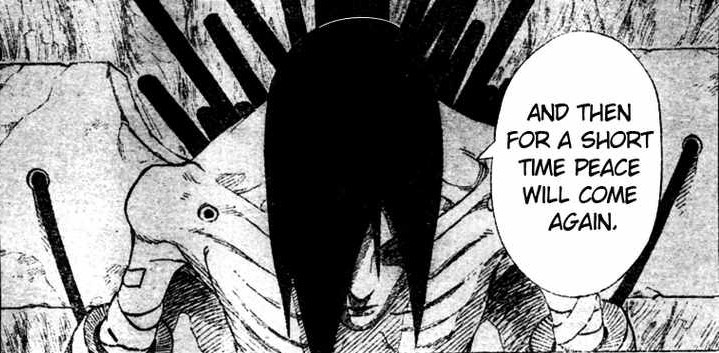
The last war is fighting the urge to become what once took away everything we ever loved.
Over the last few years, I have been trying to figure out what has changed so elementally around me. There have been pandemics before, wars too. What is new for this generation may not be that new for humanity at large. I wonder what it is but recently, reality does seem stranger than fiction. Maybe it was always so. Is it because I am older now? Maybe I have become more receptive to it now. I feel drawn towards surrealistic art, anime, and dystopian sci-fi literature. I marvel at the insights that had already been left for us in history and by so many artists. Recently, I have been re-reading Margaret Atwood’s The Handmaid’s Tale. To me, the book was a nightmare coming alive. And yet what frightened me even more was sensing that the promised nightmare was already here, breathing down my neck in the world around me.
When I wrote The Handmaid’s Tale, nothing went into it that had not happened in real life somewhere at some time. The reason I made that rule is that I didn’t want anybody saying you certainly have an evil imagination, you made up all these bad things. I didn’t make them up.
Margaret AtwoodThere are two thoughts, out of a trillion others, that often keep gnawing at me, no matter how much I try to push them away. I can make them fade out in the background from time to time, but not for too long. And that is because no matter at what stage I am in life, no matter what time or space, what moment in history, I can feel the ghosts of these thoughts waiting for me inevitably at the end of every road. One answers the other, yet, inevitably ends up strengthening the perplexity of the other. What remains is a big question. A question I am too small to answer on my own.
I have always found it despicable whenever I caught myself receding into bad habits, even after knowing fully well they are bad for me. As such, when other people continue to walk down certain paths knowing fully well where they lead, I feel infuriated, and yet, I understand them completely. It is not easy to act on something even if you know everything. Everything that can dissuade you from walking down that road.
Because things are not as simple as they seem on the surface. We hardly understand anything at all about life, death, reality, and the cosmos.
Taken on a larger scale, these are the thoughts that keep revisiting me:
Why, after all these years of recorded histories of nations and people, their diverse life experiences, after knowing about the outcomes of wars, violence, and greed—why do we continue to walk down the path of self-destruction? Why have we not solved world poverty when there are enough resources to go around for everybody? Why can we not take better care of our environment? Why can we not change when we know how this ends?
And yet, if I ask myself truthfully, how many times have I witnessed myself continuing to repeat the patterns from my own life history, let alone learning from the example of the people around me. My head took cognizance and acknowledged the experiences of the people around me. I heard the voices of my parents and understood the logic behind their words. Yet, I still had to see for myself. And even after seeing for myself, I continued to repeat many mistakes throughout my life. If someone would question me about it, even if it was my own self asking, pleading through a journal entry addressed to my future, I could only answer this with: It’s complicated.
And if it’s that complicated for one life, my own, I cannot even begin to imagine nations, the world, and the entire universe and its geological history.
I am thirty years old. I am at that stage in life when I don’t really care about the way I am perceived by others. If I am perceived as a weeb, so be it. I would proudly proclaim myself as one. My utmost respect for Japanese philosophy and way of life did not grow overnight. I have learned about it slowly, seeped it in, drop by drop, slowed down enough to catch its still silent message in the air. I have slowly found myself growing attuned to this philosophy, the slow pacing of the narratives, and learned to be grateful for the small joys of day-to-day life. Inevitably, I have found myself growing deaf to the formulaic fast-paced flicks. The message that Miyazaki has engraved into his films can be seen operating in many Japanese films and anime as well:
The concept of portraying evil and then destroying it – I know this is considered mainstream, but I think it is rotten. This idea that whenever something evil happens someone particular can be blamed and punished for it, in life and in politics is hopeless.
Hayao MiyazakiThis idea lives at the heart of Naruto and Attack on Titan as well. The character arcs of Sasuke Uchiha and Eren Yeager are records of how villains and dictators are born. The rich background stories of antagonists are very important to better comprehend that blame cannot be placed so easily. Kaya shows a lot of maturity in her ability to understand that Gabi, even as an Eldian serving the Marleyans, had nothing to do with the death of her mother. Yet, on discovering that Gabi fired the shots that killed Sasha, the woman who had saved her life, Kaya is unable to repress her anger and lashes out to blame Gabi. True, the finger that pulled the trigger that killed Sasha belonged to Gabi, yet, maybe the shot that killed Sasha had been fired long before. Was it when Sasha herself killed Gabi’s comrades? Was it when Eren’s mother was eaten alive by the titans which, in turn, lead to the attack on Marley? Was it the moment when Reiner refused to turn back and decided he wanted to prove his heroism? Or did it all start long before that with power and the distrust that seemed to grow around it like a plague? Where were hate and distrust born? Who can be blamed? Who can make amends?
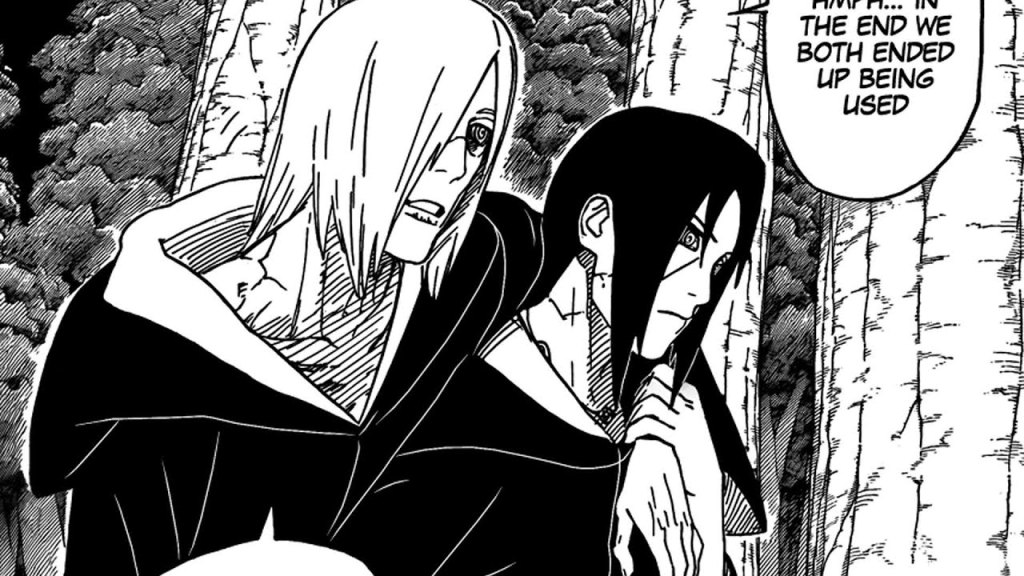
As Pain says to Naruto:
We are just ordinary people driven to revenge in the name of justice. But if revenge is called justice, then that justice breeds yet more revenge and becomes a chain of hatred. […] Just by living, people hurt others without even realizing it. So long as humanity exists, hate will also exist. There is no peace in this accursed world. War is just a crime paid for by the pain of the defeated.
Or when Madara Uchiha spoke:
In this world, wherever there is light – there are also shadows. As long as the concept of winners exists, there must also be losers. The selfish desire of wanting to maintain peace causes wars, and hatred is born to protect love.[…] Talking about peace, whilst spilling blood, it’s something that only humans can do.
Naruto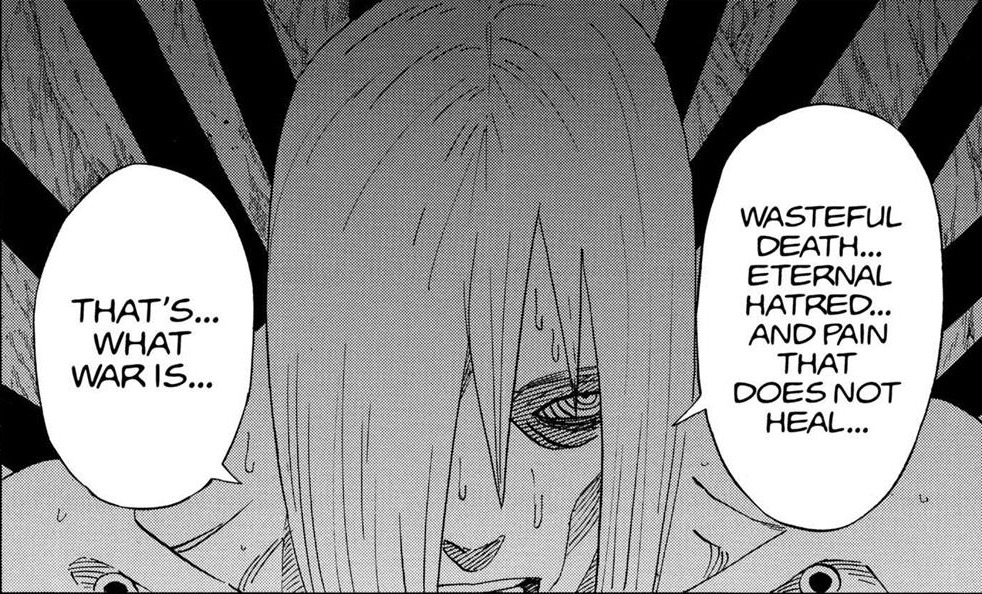
Today, as Russia invades Ukraine, why do I feel as if Pain and Madara had made a prophecy of sorts? If I am being honest, I cannot bring myself to completely disregard the doubts and philosophical problems these characters had already been dealing with for a lifetime. Naruto’s own silence and temporary self-doubt upon hearing them speak says more about it than anything else that I can say here. What went wrong with Sasuke, Eren, Yagato, and Kabuto? What did pain do to all of them? They were not born that way. Can blaming or punishing one Eren or Kabuto end war for good? Can you ever blame one side completely? Isn’t Gabi another Eren in the making? The conversation between Eren Jaeger and Reiner Braun sheds more light on the similarity of the human condition worldwide than anything else. Often, stepping from one side of the narrative to the other is like stepping through the looking glass:

Eren Jaeger: It’s true… I once thought of everyone on the other side of the ocean as my enemy. Then… I crossed it. I slept under the same roof as my enemies. And I ate the same food as them. Reiner… I’m the same as you. Sure, there were people who pissed me off. But there are good people too. (glances at Falco) Past the ocean… Inside the Walls… We are all the same. But all of you… You were taught that everyone inside the Walls was different from you. That they were demons. That they were devils that threatened you Eldians who lived on the Continent along with the rest of the World. You were ignorant children. And all of that was beaten into you by ignorant adults. You were just a child. What could you have done to fight back against that? Your environment. Your history. Right, Reiner? All this time… It was painful for you, wasn’t it? I think now… I finally understand that.
Reiner Braun: … (breaks down completely in anguish and self-loathing, falling at Eren’s feet) NO! You are wrong, Eren! I… That day… That day… When Marcel was eaten… Annie… and Bertholdt wanted to abort the mission. They tried to turn back, but.. I… I convinced them not to… and made them continue… Yes… It was partially out of self-preservation… But… I wanted to become a hero! That’s why I always acted like everyone’s big brother too. I wanted someone to respect me… That wasn’t about my age or my environment… It was my fault. Your mother was eaten by a Titan because of me!! I can’t stand this anymore… Just, kill me, please… I want… to vanish…
Attack on TitanSomewhere between circumstances and free will, lies the truth. The choice to grow up and turn into Kabuto or Naruto is partial and yet definitely there. There are enough Danzos sitting in political power, channeling the hatred of the world and throwing around the lives of their people as if they were mere pawns. When Asuma tells Shikamaru that the kings in a game of chess are actually the common people and not the hokage, he comes to understand the first rule of the Leaf village which dictates that at the time of crisis the first necessity is to protect the people and get them out of harm’s way. For when the people are lost, then all is lost. And yet, the politicians today who puppeteer the strings of wars sit back comfortably after pronouncing death sentences on their people. They should be the ones put together on the battlefield and allowed to fight out for their vested interests. Ordinary people know the value of their ordinary day-to-day life and its priceless peace. They are never the warmongers. Never were.
It is easy to place the blame on one nation, one leader. Vilifying Putin is one thing. But feeling satisfied with just that would be a grave folly. The roots of the problem go much deeper. Why does NATO still exist even after the end of the cold war? What about the death of Ukraine’s sovereignty in 2014 and the U.S.’s role in it? An invasion is an invasion. But it is also an invasion when the U.S. and its allies use terms like humanitarian intervention, counterterrorism, national security as excuses for their terrorist acts. What about the bombing in Syria and Somalia? This is not the beginning of war only because this goes counter to the vested interests of the protagonists of the present narrative, namely the US and its allies, it simply means the widening of the battlefield that already exists, has continued to exist under various premises, behind various excuses. The widespread hysteria against China is nothing but a blind echoing of the inherent insecurity and paranoia felt by the U.S. as China emerges out of the US’s economic influence. This is not to say that invasions should not be condemned. All invasions are violent. Precious lives are lost daily because of them. Violence needs to stop. The fact that we were blessed to be born on this planet where there is enough for us all to co-exist peacefully and yet we continue to live in a world where such inequality and injustice continue to exist is a shame. Eren’s words still ring in my ears. His cry to fight, to fight for freedom. 戦い! Tatakai!
We’re born free. All of us. Free. Some don’t believe it, some try to take it away. To hell with them! Water like fire, mountains of ice, the whole bit. Lay your eyes on that, and you’ll know what freedom is, that it’s worth fighting for! Fight to live, risk it all for even a glimmer of real freedom! It doesn’t matter what’s waiting outside the gate, or what comes in! It doesn’t matter how cruel the world can be, or how unjust! Fight. Fight. Fight. FIGHT! FIGHT!!!
Eren Jaeger, Attack on TitanWe cannot avoid this fight. We have to fight. But what shape will our fight take? Naruto’s fight is not against a person, a villain—as much as it is against hatred at large. His fight, rightly, starts inside himself, as he comes to terms with the hatred and resentment in his own heart. That is the hardest fight there is. And yet, how do you take on the hatred of an entire nation, an entire community, the human civilization? Can it be done? Madara Uchiha dreams of an ideal world. His project Tsuki no Me (The Eye of the Moon) is his own solution to this philosophical problem of the human condition. He wants to trap the entire world in a dream state in which people lose their egos, sense of self, free will and are united together under one will, his own. Yet, this peace would be an illusion at best. Even if human civilization could start from scratch and be a tabula rasa, due to an in-built flaw in our design, we would inevitably find our way back to all the hurt and misery we suffer from today.
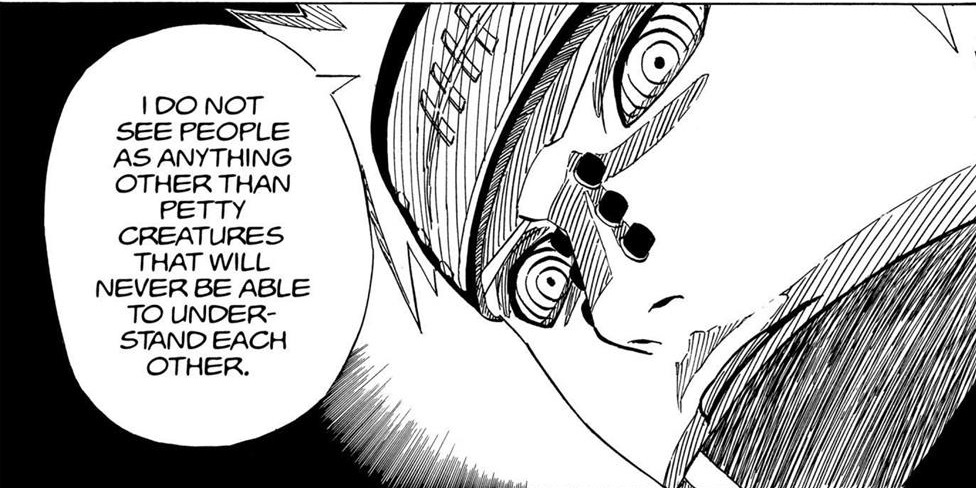
Can we find it in our hearts to transcend this human condition? How do you resist the urge to lash out when you have been the victim of an act of injustice? Should you let the unjust walk all over you? Put forward the other cheek, as Gandhi would say? How do you decide? I am yet to see how Naruto and Attack on Titan resolve these philosophical problems that are at the heart of their narratives.
These are tough decisions.
Levi had something to say about that:

I don’t know which option you should choose. I could never advise you on that… No matter what kind of wisdom dictates you the option you pick, no one will be able to tell if it’s right or wrong until you arrive to some sort of outcome from your choice.
Captain Levi, Attack on TitanBut we already arrived. Countless times. The first world war, the so-called “war to end all wars,” led to the second world war. The second world war led to the cold war. NATO, the relic of the cold war, continued to expand unchecked. And now, Russia is invading Ukraine. We have always known the outcome. There are no victories in war, only defeats. Every war, every act of violence, sows seeds of hatred that never cease to perpetuate even more violence. Honestly, every time I wake up horrified how the world has become slightly more terrible in its countenance than yesterday, adding to itself more suffering, more misery, I feel a sense of déjà vu.
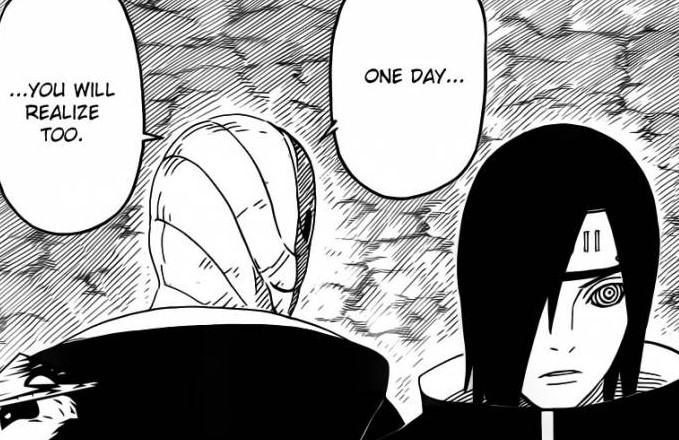
This has happened before. This will happen again. George Santayana stated, “Those who cannot remember the past are condemned to repeat it.” It seems we are all stuck in the Izanami with Kabuto in a constant loop of human misery as a promising future keeps flying by. Until or unless we fundamentally shift the way we feel, there seems to be no way out of this genjutsu. I wish I had the answers, but I don’t. The questions are too big. And they continue to haunt me.
-
The Talent Myth: The Unbearable Lightness of Being Yaguchi in Blue Period
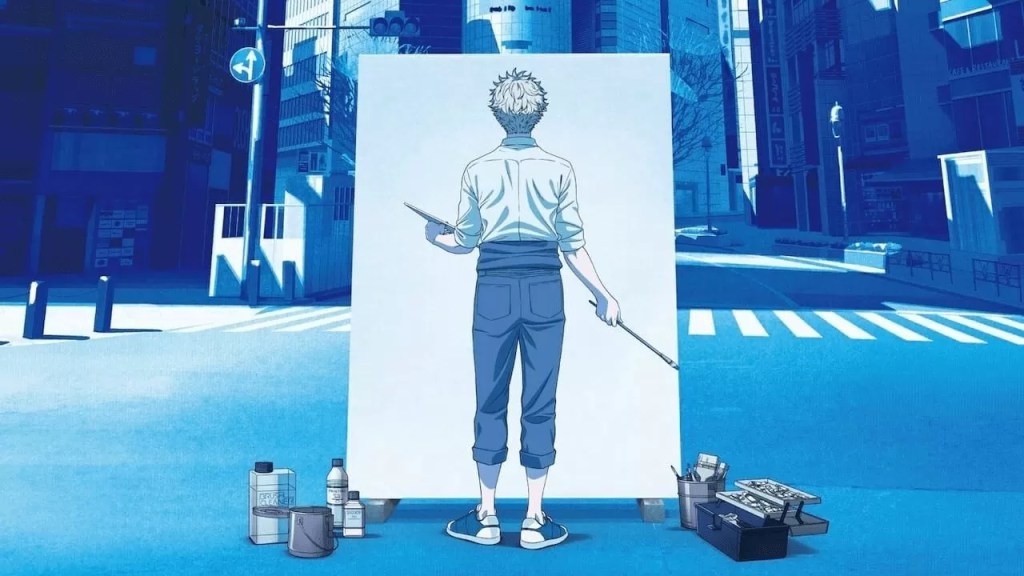
A still frame from Blue Period. Listen up. Because this story is about you and me. Once upon a time there was a little kid. The kid had a dream. Stop. Fast forward two to three decades into the future. Over the years the kid managed to survive, to obtain a few degrees and, luckily, even topped some of the exams on the way. Sounds familiar? Where did it all lead the kid? Where did it all lead you? It all led you to a job that sort of pays well. You are doing okay. Not great. Not like you won the Nobel prize. Not that your passion is shooting out rainbow rays bursting out of the pale walls of your office and hitting the guy making his eighth cup of coffee in a bureau across the street. Or maybe, shockingly, it all led you to a six-month period of hell we famously call the Job Hunt.
And you are sitting there, with the dishes still in the sink, watching a series on Netflix, unable to budge, with this heavy feeling that you need to turn things around—but how? Is it disappointing to wake up one day and admit that, well, it seems like you are not very talented after all? That so and so from work or school is better, a genius, and that you can never really hope to catch up even if you badly wanted to. That they are ‘talented’ in the real sense of the word. That things come naturally to them. That it is easy for them to do what they do.
Is it disappointing?
Or rather do you feel relaxed after thinking this way? What you just declared impossible does not require any more work. If Tom and Suzy from work are simply geniuses, you don’t need to get up from the couch and put in the work. Well, I have some bad news for you. I am going to make us feel uncomfortable right here, right now.
Read on.
Let me tell you something about myself. Admitting that I am in trouble does not come easy to me. I carry the uneasy feeling around without sitting myself down and listening to what is going on inside me. For days at a stretch. Luckily, in my efforts to escape from this feeling, I began watching the anime Blue Period on Netflix, based on a manga by Tsubasa Yamaguchi who calls it “a manga about working hard.” And as fate would have it, the anime picked on the exact uneasiness and confusion that I had been trying to avoid facing but badly needed answers to. The anime tells the story of Yatora Yaguchi who is shown to be a popular student at school while also managing to excel at his studies. What made me instantly relate to his character was a very random moment and the relatability kept growing out of proportion, till I was looking at the anime in hopes of finding an answer for myself. Let me tell you why.
I have been what you would call a hard worker for as long as I can remember. I cannot name one thing that comes easy/ naturally to me. So obviously I told myself at a very young age that for me to simply survive and be average was going to require humungous efforts. I come from an Asian household where grades can pronounce a life sentence and declare or predict, early on, your chances of survival in the world. So I was terrified. When I was young, I actually believed that my parents would abandon me if I failed to bring results. I could feel their disappointment as we sat down to eat if I had not been doing well at school. So I did what I had to do. I worked hard. Real hard. Sickeningly hard. I studied before, during, and after classes. I studied in advance. I studied while commuting. I gave myself more homework than what was given by the tutors. And soon, I became a top-tier student at my school. I carried this work ethic into my college days and I had juniors who would come up to me and say they envied how talented I was. And yet, I am not smarter or more talented than anyone else.
When I entered the university and lived away from my hometown, I was exposed to a different challenge—socializing. And god was I bad! I just could not read people and what they wanted from me. After many setbacks in my attempts to understand people and their variability and unpredictability, I finally managed to grow a smaller but closer circle. But even so, I was always afraid to tell them about the things I loved. So when Yaguchi in Blue Period decides to leave his partying friends early because he has a class in the morning or when he begins to doubt if the life he had built around him, watching matches and drinking, was actually his or someone else’s version of what his life was supposed to be, I heard him loud and clear. Was he getting carried away? Was he even having honest conversations with the people around him? Did they know that Shibuya appeared like a blue dream to him in the early hours of the morning? Could he tell them that? I had felt the same way. And like Yaguchi, I too began to open up with the people who I wanted to be close to and honest with. I began to show them my real self. And honestly, they did not mind it. Rather, it brought me closer to them and made me enjoy being around them even more as I continued to do so while being myself. In the anime, Yaguchi struggles to tell his friends about the blue Shibuya of early mornings, but his art is able to make that conversation easier. This thrills him.
In the anime, the debate of talent versus hard work is ever-present. For Yaguchi, art is an unknown realm. So he ends up mystifying its creative processes and the work that goes into it as pure talent. This is exactly what he ends up telling his senior Mori senpai—that she is amazingly talented and that he envies her. The painting by Mori is very inspiring for Yaguchi but comes across as an unapproachable pinnacle of something he is drawn towards but that he ends up shrouding in a mysterious air of innate genius, thereby relieving himself of the pressure to possibly pursue it. But when Mori responds to the contrary, Yaguchi realizes that it is exactly like the case where his friends dismissed his hard work as a free bonus that comes with being a genius. So when Mori says, “I am not talented. I just spend more time thinking about art than others”—he understands. She goes on to tell him: “Also, its necessary to study methods in order to make art. So just brushing it off as ‘talent’ is like I haven’t put any effort into it.” This is true. But it also means that Yaguchi cannot brush off his own lack of effort to begin as “So and so is more talented than me. They were just born that way.”
We, too, have to face it. A thought. A thought which we might have been denying for a long time now:
YOU NEED TO WORK HARD TO BE TALENTED AT SOMETHING.
It also means that:
There is absolutely nothing in the entire world that is impossible for you to learn or become good at.
It just requires persistence, passion, consistency.
It requires you to choose:
I WANT THIS. I AM GOING TO GET THIS.
But nah—these are mere words. The process is much deeper than that.
Whatever you want to do, you need to do more of it. But not just that. You need to study it deliberately. What they call ‘conscious learning.’ The correction of habitual mistakes. The learning of new things. Which is mostly too difficult to do and, more often than not, no fun at all. And this is the point where some people stay with the uneasiness and consistently carry on doing what they WANT to LEARN to do, and others quit and compromise, become mediocre, or fail.
Don’t just take my word for it.
Pick any success story and trace it back to its origins.
The answer is the same. As Ralph Waldo Emerson put it:
“Every artist was first an amateur.”
Or hear out Stephen King:
“Talent is cheaper than table salt. What separates the talented individual from the successful one is a lot of hard work.”
Or Kevin Durant:
“Hard work beats talent when talent fails to work hard.”
Let me give you more examples from James Clear’s article on “The Daily Routines of 12 Famous Writers.” Octavia Butler was not always a writer. She started off as a telemarketer, a dishwasher, a potato chip inspector, and did her fair share of odd jobs. Stephen King worked as a janitor, gas pump attendant, industrial laundry worker, wrote Carrie (rejected by thirty publishers) while living in a trailer with two small children to take care of. E.B. White made his living room, “a passageway to the cellar, to the kitchen, to the closet where the phone lives,” work as his writing space. Henry Miller warned: “Work according to Program and not according to mood. Stop at the appointed time!” Or “Write first and always. Painting, music, friends, cinema, all these come afterwards.” Or as Khaled Hosseini said: “You have to write whether you feel like it or not.” Barbara Kingsolver juggled being a mother with being a writer by showing up at her writing desk at four in the morning. Nathan Englander turns off his phone while writing. Like Ernest Hemingway or Kurt Vonnegut (both of them early risers), Haruki Murakami shows up, without fail, at his writing desk 4 am in the morning and continues to work for 5-6 hours. In his words:
I keep to this routine every day without variation. The repetition itself becomes the important thing; it’s a form of mesmerism. I mesmerize myself to reach a deeper state of mind. But to hold to such repetition for so long — six months to a year — requires a good amount of mental and physical strength. In that sense, writing a long novel is like survival training. Physical strength is as necessary as artistic sensitivity.
Haruki MurakamiYou get the picture.
And why just stop there?
Take a moment and think about any one thing you did really well. Think about why you came to do it well in the first place? Were you encouraged at a young age and devoted yourself to it? Did you consciously learn it through trial and error, and what people saw was the end product of a cumbersome process? Either way, know this:
You can make the same thing happen and apply the same process to other things.
Bigger things.
Erica Jong said:
“Everyone has talent. What’s rare is the courage to follow it to the DARK PLACES where it leads.”
That dark place is a painful place of conscious learning. Often, it is not a fun place to be in. But if you want your dreams bad enough, you will stay in it and grow out of it.
So let’s get working.
Let’s show up at our desks and create magic.
Let’s get to a point when the dots are beginning to connect and rainbow rays do burst out of your pale office walls, hitting the guy making his eighth cup of coffee in a bureau across the street. Let’s imagine him waving at you as you pack up, ready to leave your 9 to 5 job to finally work at what you are insanely good at. (Just as Mori packs up her stuff, ready to attend the art university she had successfully got selected at after all that hard work.)
And when people say how talented you are, you go ahead and tell them exactly what went into it.
Consistent work.
As simple as that. As light and clear.
And just as difficult to do.
But a kind of difficult that you are willing to bear. A price you are willing to pay.
And like Yaguchi who says, “I should be proud of these pieces and the improvements I’ve made,” don’t forget to pat yourself on the back for all the little victories on the way.
Knowing that hard work is the only key there is can be daunting, but it is also a superpower in itself. This knowledge brings a responsibility with it. A responsibility to yourself and your dreams.
There is no choice to run away now.
We must face the music.
And while we are at it, let’s do it gladly.
-
Subscribe
Subscribed
Already have a WordPress.com account? Log in now.
 Uhi K;